

 Acas recently published new guidance on religion and belief to help employers prevent discrimination on these grounds in the workplace. To assist employers further, we’ve produced another series of “myth busters” to help separate fact from fiction in this area, all of which will be published on our website over the coming weeks. Of course, if you’re an employer and would like to discuss any of the issues touched on in these posts, please contact one of our HR consultants in confidence and without delay for some initial advice free of charge and without obligation.
Myth: There is no justification for employees deviating from their employer’s dress code and so disciplinary action up to and including dismissal should follow.
Fact: Where a dress code does not provide for flexibility in relation to religion or belief, there may be justification for such deviations.
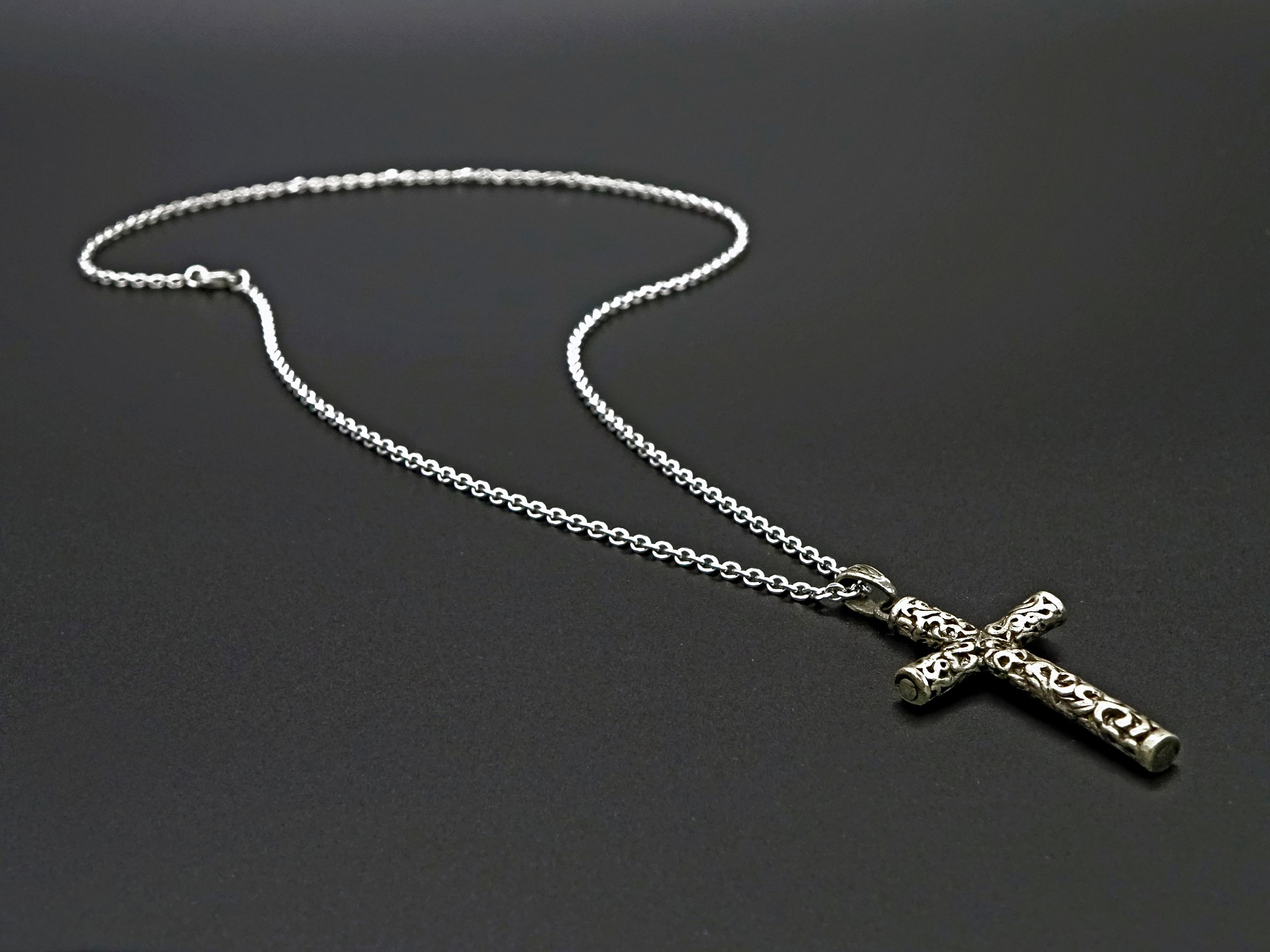
In 2013, a decision was handed down by the European Court of Human Rights (ECHR) to the effect that a Christian employee had her human rights breached by not being allowed to wear a visible cross at work.
Nadia Eweida took her case to the ECHR after being sent home from her role at British Airways after she refused to remove a cross that was at odds with the organisation’s dress code.
The consequence of this ruling is that employers are now subject to an increased requirement to justify any dress code that has the potential to discriminate against religious groups, e.g. one that precludes employees from wearing items such as a hijab or turban.
 For public sector employers, this means employees are now entitled under the Human Rights Act 1998 (HRA) to manifest individual religious beliefs in the workplace and to do so in a way that might not be shared by other followers of that religion. Generally, claims under the HRA cannot be made directly against a private sector employer. However, the position resulting from the Eweida ruling is a little more complex. Employment Tribunals are obliged to interpret UK law in line with human rights, meaning a private sector employee can bring a claim for discrimination and argue that the law needs to be interpreted in line with the ECHR decision. Indirect discrimination specifically requires that a group suffers a disadvantage, yet the human rights case law now does not.
In 2016, an Advocate General (a lawyer who advises the court on a neutral basis) for the European Court of Justice (ECJ) handed down an opinion that a blanket ban on religious dress by an employer which then prevents a Muslim woman from wearing an Islamic headscarf when in contact with clients amounted to direct religious discrimination.
 The case in question (Bougnaoui and another v Micropole Univers) involved a Muslim IT engineer who wore an Islamic headscarf and was instructed to remove it by her French employer while visiting clients following a complaint about her appearance from a client staff member. When the Muslim employee refused to comply with her employer’s request, she was dismissed for breaching its rules prohibiting employees from expressing or displaying personal beliefs in the presence of clients. Consequently, the employee made a claim in the French domestic court which was then referred to the ECJ for clarification on the issue of whether or not the customer’s request constituted a “genuine and determining occupational requirement” of the job.
The Advocate General did not consider that the Claimant’s headscarf would preclude her from performing her duties as an IT engineer, a fact confirmed by her letter of dismissal attesting to her professional competence. The Advocate General also opined that a neutral dress code could have resulted in indirect discrimination unless it was in pursuit of a legitimate aim, was proportionate and could therefore be objectively justified.
Chris Nagel, Director / Head of HR at EML, comments…
“Dress codes should be drafted in such a way that they take account of the fact that some employees dress in a certain way because of their religion or belief…and even if they are, I would still recommend that instances of non-compliance are dealt with on a case-by-case basis in order to reduce the scope for discrimination claims.”